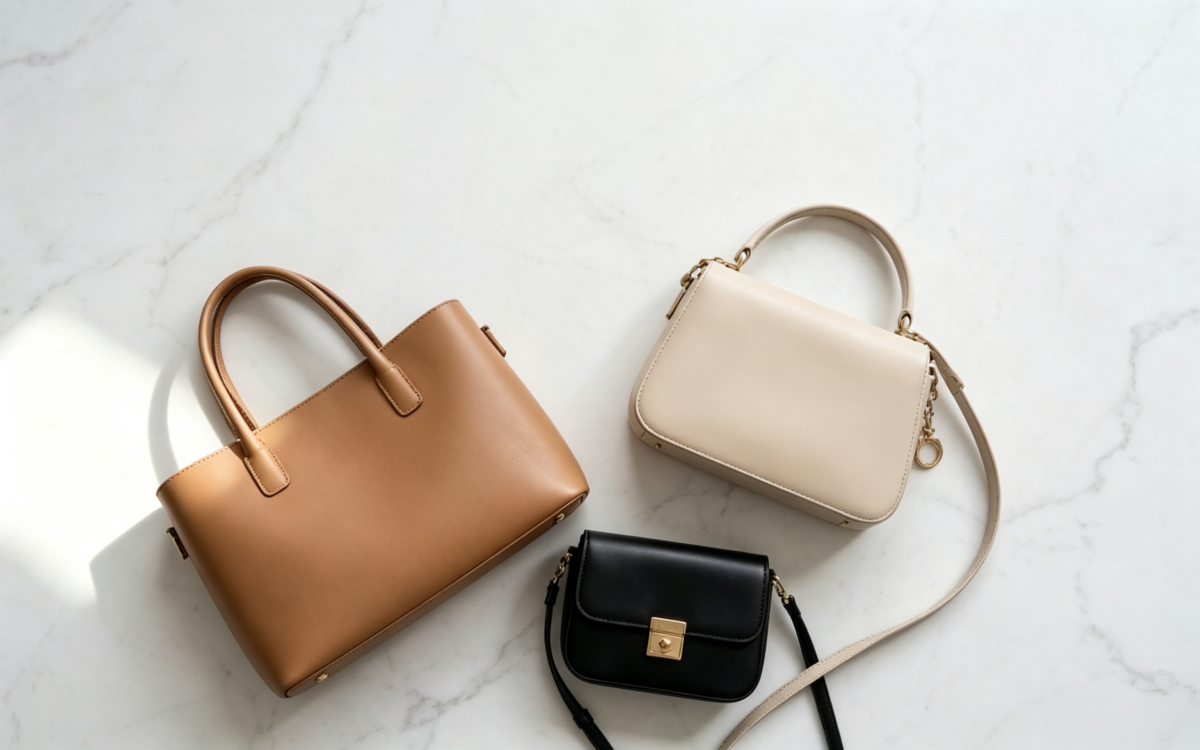
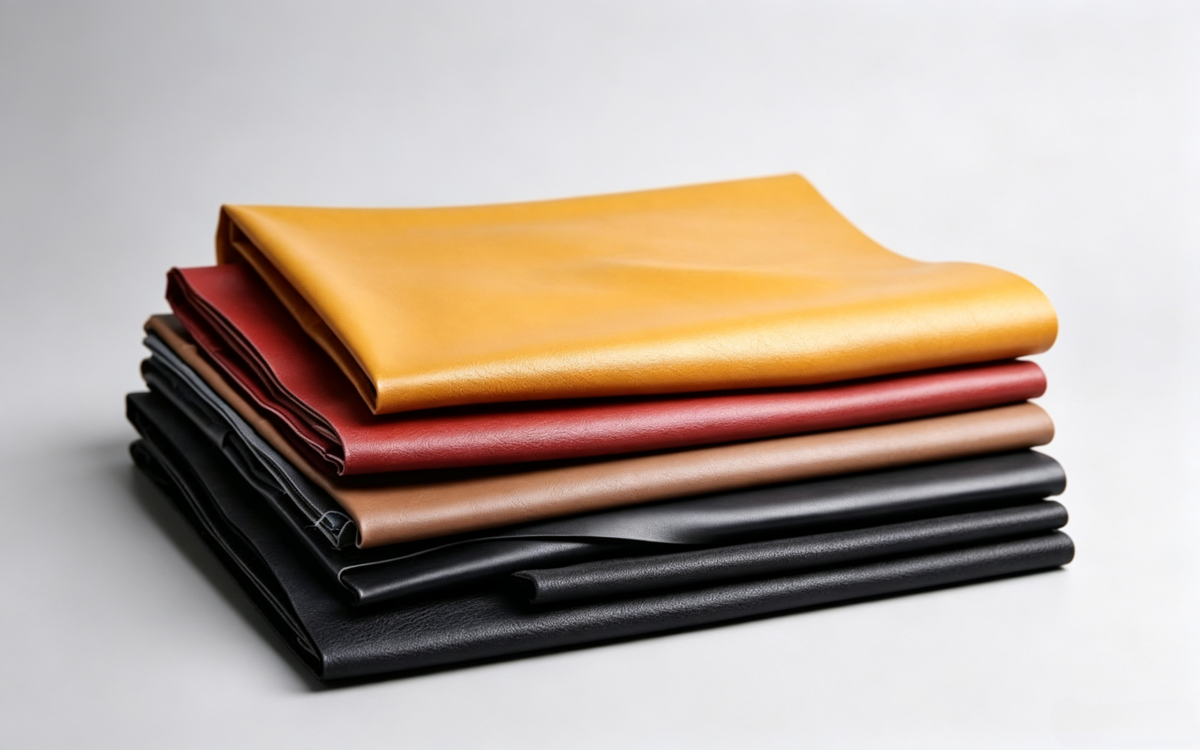
Hardware accessories are the soul and core support of high-end women’s handbags, as well as the most frequently used parts that most intuitively reveal product quality. Leather will develop a unique vintage patina with long-term use, while hardware quality directly determines a handbag’s delicacy and service life. Mass-produced low-cost handbags widely adopt cheap hollow iron and recycled inferior alloy hardware to cut costs. Such hardware is ultralight and textureless, with rough edges, obvious burrs, sharp corners and flawed seams. During daily use, inferior hardware easily fades, darkens, oxidizes and rusts, accompanied by stuck zippers and loose clasps. Even a brand-new bag will look cheap and lose its luxurious vibe entirely due to low-grade hardware.
Premium luxury handbags adopt extremely strict standards for hardware selection and craftsmanship, completely abandoning low-cost materials and selecting high-quality raw materials such as solid brass, aviation-grade refined steel and high-purity alloys to ensure top-tier texture from the source. All hardware accessories undergo dozens of sophisticated processes, including fine grinding, mirror polishing, matte wire drawing and multi-layer vacuum electroplating. The finished hardware features a cool, substantial and weighty touch with a smooth, scratch-free and burr-free surface and seamless joints. For core accessories, premium bags are equipped with industry-top customized zippers from YKK and Riri, delivering silent, ultra-smooth and jitter-free pulling experience with perfect tightness. Reinforced clasps, rivets, hooks and chains close crisply and accurately, remaining stable after thousands of repeated uses. Adopting wear-resistant and scratch-resistant vacuum electroplating technology, high-end hardware presents pure and premium tones including matte, glossy and vintage bronze. It resists fading, scratching and oxidation effectively, keeping a brand-new appearance for years and matching the long-lasting value of luxury handbags.
02 Stitching: The Silent Proof of Superior Craftsmanship
While hardware shapes a handbag’s appearance, stitching craftsmanship builds its core structure and soul, most intuitively reflecting a brand’s technical level and artisan spirit. Stitching runs through the entire production process, covering body splicing, edge sewing, pocket fixing and stress reinforcement, directly affecting a handbag’s three-dimensional shape, durability and overall aesthetics. Most mass-produced affordable handbags are sewn by high-speed assembly lines to save labor costs and improve efficiency, with no attention to detail. These bags commonly suffer from uneven density, crooked lines, skipped stitches, floating threads, broken stitches and exposed thread ends, along with rough edge splicing and unnatural curved stitching. Apart from a messy and cheap visual effect, flawed stitching causes body deformation, fabric cracking, loose seams and collapsed edges after long-term use, greatly shortening the handbag’s service life.
Premium handbags adhere to exquisite combined craftsmanship of manual work and precision mechanical sewing, abandoning rough assembly-line production and implementing strict standardized requirements for every stitch. The overall stitching is straight, smooth and unified with evenly spaced stitches controlled within millimeter-level error, completely avoiding crooked lines, skipped stitches and floating threads. For difficult parts such as body corners, arcs and splicing positions, the stitching is fluent and natural with a perfect fit, shaping a neat, advanced and three-dimensional silhouette. Key stress and friction parts including handles, bag openings, sides and bottoms adopt double-layer or triple-layer reinforced stitching. The multi-layer reinforcement greatly improves load-bearing capacity and wear resistance without damaging overall aesthetics, fundamentally preventing seam loosening, deformation and collapse. Both exposed and hidden stitches are clean and tidy with no redundant thread ends and flawless splicing gaps. This extreme attention to detail forms an irreplicable technical barrier for mass-produced products, enabling premium handbags to maintain a three-dimensional shape and durable texture for years.
03 Lining: The Hidden Interior Craftsmanship
Seasoned handbag collectors always judge quality by interior details. True premium texture lies in the inner lining that most consumers easily overlook. As the “inner skin” of a handbag, the lining best reflects a brand’s sincerity and quality control standards. Many affordable bags only focus on exterior beauty and cut corners on interior materials, which becomes the key dividing line between high-end customized bags and cheap mass-produced ones. Low-end handbags widely adopt ultra-thin inferior non-woven fabrics, recycled chemical fibers and ordinary polyester as liners. These materials are thin, fragile, rough and low-toughness, easy to tear and deform with slight pulling. They are prone to pilling, snagging, shedding and fading during daily use. When storing cosmetics, keys and mobile phones, the liners are easily scratched and produce debris that sticks to personal items. Meanwhile, inferior fabrics release pungent chemical odors that linger for a long time, seriously ruining the using experience and overall texture.
High-end handbags adhere to the quality control concept of ultimate refinement both inside and out. Even the invisible interior lining adopts top-grade materials and exquisite craftsmanship to achieve consistent premium quality inside and out. Premium liners are mostly made of high-density microfiber, high-count combed cotton, customized matte satin and thickened Oxford cloth. These high-weight fabrics are thick, compact and super tough with a soft, smooth and skin-friendly touch, completely free from the roughness of cheap materials. Professionally treated with advanced technology, the liners are anti-pilling, anti-snagging, anti-static, fade-resistant, wear-resistant and scratch-resistant, remaining intact during daily storage and frequent use. Technically, the premium lining fits closely to the bag body without looseness, bulges or redundant wrinkles, with neat and dense stitching, clean edge wrapping and no burrs. The internal compartments and pockets are scientifically arranged with clear partitioning, balancing practical storage functionality and overall aesthetics. In addition, the fabrics are antibacterial and deodorized, free of chemical odors and bacterial growth, keeping fresh and clean even after long-term closed storage. Even the unnoticed inner corners maintain flawless delicacy, interpreting the uncompromising ingenuity of high-end accessories.
Conclusion: Details Define Ultimate Luxury
In the global handbag industry, exterior design, silhouette and leather texture are the easiest elements to replicate and imitate. A large number of high-copy and alternative bags on the market can duplicate the appearance and leather feel of designer products at low cost, making it hard for ordinary consumers to distinguish quality grades. However, the subtle craftsmanship details form the irreplaceable technical barriers and core value of high-end handbags. The precision-forged hardware, millimeter-level accurate stitching and high-quality lining materials create the superior texture and value that mass-produced products can never achieve. A worthy long-term luxury handbag never relies on brand premium, flashy logos or marketing hype, but on extreme detail polishing from inside to outside. For taste-oriented consumers, quality always outweighs hype, and craftsmanship outweighs appearance. Only handbags with durable hardware, standardized stitching and exquisite lining can withstand the iteration of trends, maintain permanent premium texture and become timeless classics in the wardrobe.